

Imagine walking into your home and having everything respond to your every whim. The lights dim, the thermostat adjusts, and your favorite playlist starts playing—all with a simple tap or voice command. Welcome to the world of smart home control panels, where technology meets convenience in a way that makes even the Jetsons a little jealous.
Overview of Smart Home Control Panels
Smart home control panels serve as centralized hubs that manage various connected devices within a household. Users access lighting, temperature, security systems, and entertainment options through these intuitive interfaces. Features include touchscreen displays, voice commands, and remote access, enhancing user experience and convenience.
Several types of smart home control panels exist, catering to different needs. Some panels integrate with specific brands, while others allow compatibility across various devices. Popular systems include Amazon Echo, Google Nest Hub, and Samsung SmartThings, each offering unique functionalities and features.
Functionality varies among platforms. Automation capabilities enable users to schedule tasks, such as turning lights on or off at particular times. Real-time monitoring adds another layer of convenience, allowing users to observe their home’s status from anywhere through mobile apps.
Security functions enhance homes significantly. Many control panels can connect to video doorbells and surveillance cameras, providing users with real-time alerts for unusual activities. Systems can also integrate with motion sensors and smart locks, fortifying overall security measures.
Smart home control panels foster energy efficiency as well. Smart thermostats learn user behaviors to adjust temperatures accordingly, resulting in cost savings. Users can also set schedules for appliances, minimizing energy consumption when devices aren’t in use.
Adoption of smart home control panels continues rising. Increased availability and affordability drive consumer interest. As technology advances, the capabilities of these systems will likely expand even further, solidifying their role in modern living environments.
Key Features to Consider
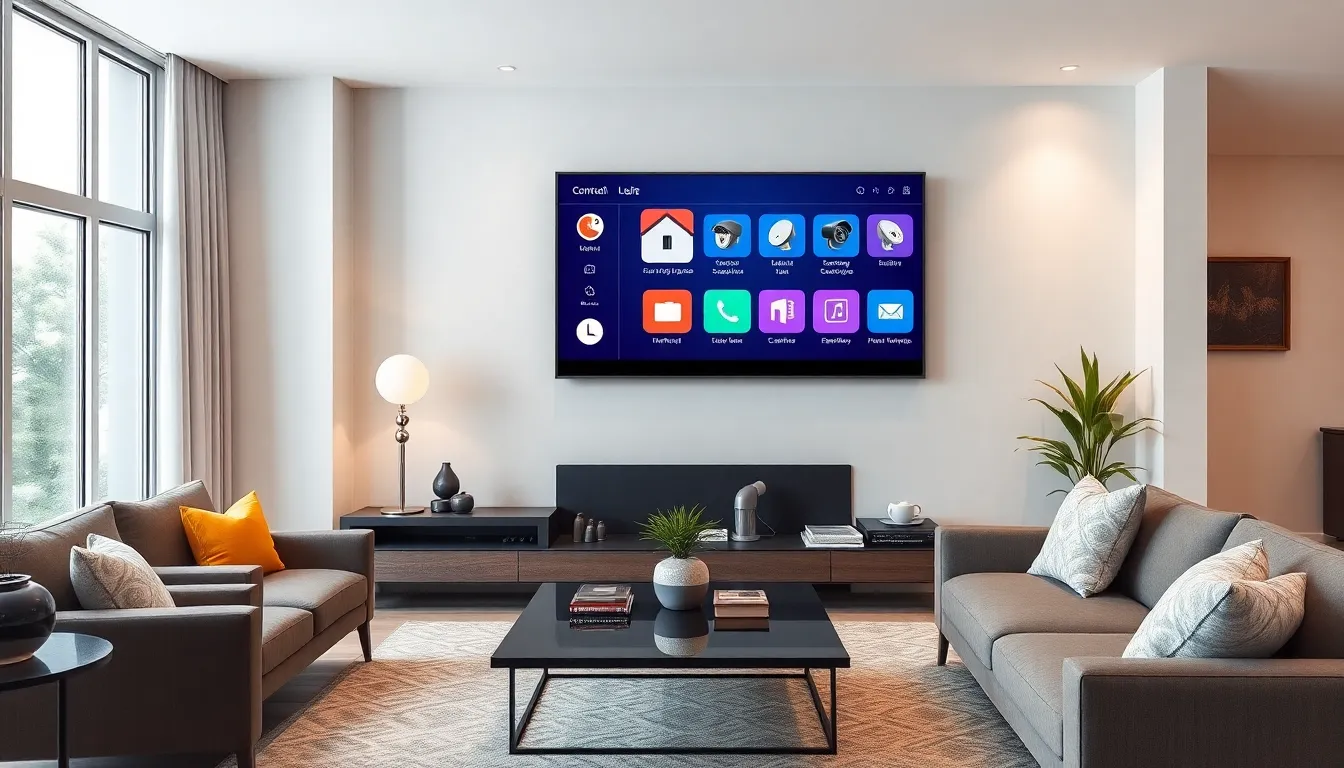
Smart home control panels come with various features that significantly enhance user experience. Understanding these features helps in selecting the right system for a home.
User Interface Design
User interface design directly impacts usability. Intuitive layouts and responsive touchscreen displays make interaction seamless. Simpler controls ensure that all family members can operate the panel easily. Eye-catching visuals create an engaging experience, enhancing clarity in managing various settings. Voice command integration offers convenience for hands-free operations, particularly useful when multitasking.
Compatibility with Devices
Compatibility with devices allows for a smoother integration of existing technologies. Many smart home control panels support multiple brands, ensuring versatility within a system. Access to a range of devices, including smart lights, thermostats, and security cameras, is crucial for comprehensive home management. Popular ecosystems like Amazon Alexa and Google Assistant enhance functionality and ensure seamless device communication. Users should prioritize systems that offer wide compatibility to maximize the benefits of smart home automation.
Security Features
Security features play a vital role in safeguarding a home. Real-time alerts from connected cameras allow users to monitor activities at any time. Many control panels integrate directly with motion sensors, ensuring that potential threats trigger immediate notifications. User-controlled access for smart locks further enhances safety, enabling users to manage entry points remotely. Comprehensive security monitoring options make these panels indispensable for modern households, merging convenience with peace of mind.
Popular Smart Home Control Panels
Many smart home control panels stand out for their features and functionality. Each model offers unique capabilities tailored to different user preferences.
Comparison of Top Models
Google Nest Hub excels with its integration of Google Assistant and a sleek design. Amazon Echo Show focuses on its extensive compatibility with various smart home devices. Samsung SmartThings shines for its ability to manage devices from multiple brands seamlessly. Ecobee SmartThermostat emphasizes energy-saving features, allowing users to control their home’s temperature efficiently. These models cater to varying needs, making it essential for users to evaluate compatibility and features before making a decision.
User Reviews and Ratings
User reviews highlight the ease of use of the Google Nest Hub, often praising its intuitive touchscreen interface. Many users prefer the Amazon Echo Show for its voice recognition capabilities. Consistent feedback about Samsung SmartThings underscores its versatility with automation tasks. Ratings for Ecobee SmartThermostat frequently note significant savings on energy bills. Aggregated user experiences offer valuable insights for anyone looking to choose the right smart home control panel.
Advantages of Using a Smart Home Control Panel
Efficient home management stands out as a primary advantage of using a smart home control panel. Users can centralize control over lighting, security systems, and temperature settings, significantly enhancing convenience. Enhanced security features play a crucial role; real-time alerts from connected devices like cameras and doorbells increase safety.
Flexibility in device compatibility also adds value. Many panels support various brands, ensuring seamless integration across multiple ecosystems. Automation capabilities provide further benefits; users can schedule tasks, creating tailored experiences based on personal routines.
Energy efficiency emerges as a significant advantage. Smart thermostats adjust according to user habits, optimizing heating and cooling to reduce energy consumption. Furthermore, control panels facilitate real-time monitoring, allowing users to track energy usage and operational status via mobile apps.
User-friendly interfaces positively impact interaction. Touchscreen displays and voice commands simplify navigation, making controls accessible to all family members. A smart home control panel not only enhances user experience but also fosters a sense of control over one’s environment.
Affordability continues to improve, making these devices increasingly accessible. As technology evolves, new features enhance their utility, encouraging wider adoption across households. Managing a smart home becomes effortless with the right control panel, blending comfort, sustainability, and security effectively.
Potential Drawbacks
Smart home control panels come with specific drawbacks that users should consider. One significant concern involves security vulnerabilities. Hackers may exploit weaknesses in the system, leading to unauthorized access to personal data or home devices.
Another drawback relates to compatibility issues among different brands. Not all devices may function seamlessly, causing frustration for users trying to manage multiple platforms. Some control panels are limited to specific brands, reducing flexibility.
Dependence on internet connectivity poses additional challenges. Disruptions in service can render the control panel ineffective, leaving users unable to manage their devices remotely. Limited offline functionality complicates situations where a connection is unavailable.
Cost also affects many potential buyers. Although prices drop over time, initial investment remains high for high-quality models. Long-term expenses associated with maintenance and upgrades may deter consumers from selecting a control panel.
Potential for technical issues exists as well. Users may face software malfunctions or system crashes, necessitating troubleshooting. Some individuals may not possess the technical knowledge required to resolve these problems effectively.
Lastly, over-reliance on automation can impact personal responsibility regarding home management. Individuals might neglect tasks or monitoring their homes, risking safety or maintenance issues.
Considering these potential drawbacks ensures that users make informed decisions when investing in smart home control panels.
Conclusion
Smart home control panels are revolutionizing the way people manage their living spaces. By centralizing control over various devices they offer unparalleled convenience and efficiency. As technology advances the integration of these panels into daily life will only grow stronger.
While the benefits are significant potential drawbacks require careful consideration. Users must remain vigilant about security vulnerabilities and compatibility issues. Balancing automation with personal responsibility is crucial to fully enjoy the advantages these systems provide.
With thoughtful selection and proper use smart home control panels can transform any home into a more comfortable and secure environment. As they become increasingly accessible more households are likely to embrace this innovative technology.


