

In today’s fast-paced world, smart home solutions are transforming how people live and interact with their spaces. These innovative technologies not only enhance convenience but also improve security and energy efficiency. From smart thermostats to intelligent lighting systems, homeowners are embracing automation to simplify their daily routines.
As technology continues to evolve, the possibilities for smart homes expand. With the integration of artificial intelligence and the Internet of Things, devices can communicate seamlessly, creating a cohesive ecosystem that adapts to individual lifestyles. This article delves into the benefits and features of smart home solutions, showcasing how they can elevate everyday living and provide peace of mind.
Overview of Smart Home Solutions
Smart home solutions encompass a range of devices and applications designed to enhance living environments. These solutions leverage technology to improve convenience, security, and energy efficiency.
Definition and Importance
Smart home solutions refer to interconnected devices that automate tasks within a home, streamlining operations with user-friendly interfaces. These technologies significantly influence daily life by promoting safety, reducing energy consumption, and optimizing resource management. The integration of systems such as security cameras, smart locks, and environmental controls supports both peace of mind and sustainability.
Key Features
- Automation: Automates lighting, heating, and appliances, reducing manual effort and enhancing efficiency.
- Remote Monitoring: Enables homeowners to manage devices remotely through smartphones or tablets, ensuring control and oversight anytime.
- Energy Management: Monitors energy usage in real time, allowing homeowners to identify savings opportunities and reduce waste.
- Security Enhancements: Integrates alarm systems, smart locks, and surveillance cameras, providing real-time alerts and improving home security.
- Voice Control: Utilizes voice-activated assistants for hands-free operation, increasing accessibility and user convenience.
- Compatibility: Interfaces seamlessly with various devices, ensuring a cohesive smart home ecosystem that adapts to user preferences and routines.
Types of Smart Home Solutions
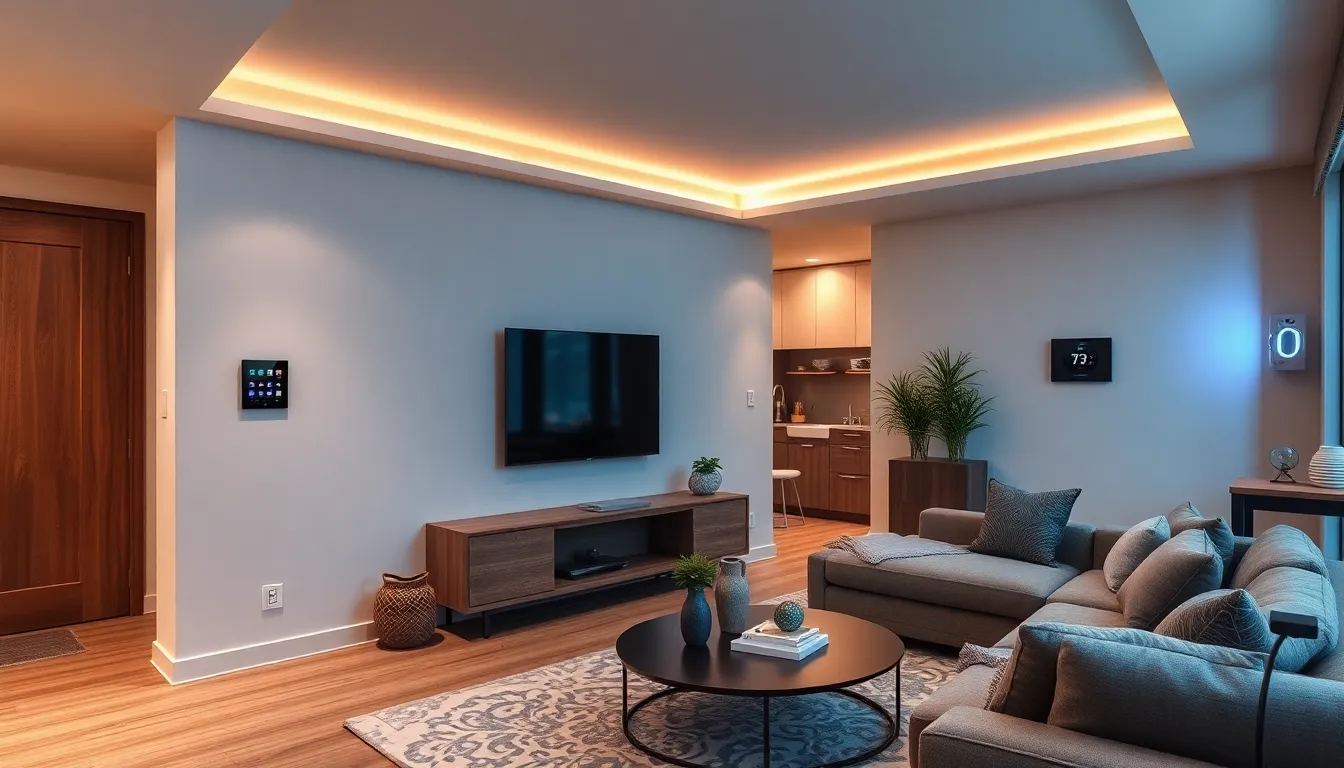
Smart home solutions encompass various technologies that enhance the functionality of residential spaces. Below are key types of smart home solutions that improve security, lighting, and climate management.
Home Security Systems
Home security systems incorporate surveillance cameras, motion detectors, and smart locks to provide comprehensive protection. These systems allow users to monitor their properties remotely, receiving alerts in real time. Notable features include:
- Video Surveillance: Cameras with night vision and HD recording capabilities.
- Smart Locks: Keyless entry options that can be controlled via smartphone apps.
- Motion Sensors: Devices that detect movement and trigger alarms or notifications.
- Integrated Alarm Systems: Systems linked to emergency services for instant response.
Smart Lighting Systems
Smart lighting systems automate and enhance the control of lighting within a home. These systems allow users to adjust brightness and color settings from mobile devices or voice-activated assistants. Key aspects include:
- Remote Control: Ability to turn lights on/off or dim them from anywhere.
- Scheduling: Option to set timers for lights to turn on or off at specific times.
- Energy Efficiency: LED bulbs that automatically adjust brightness based on natural light.
- Color Ambiance: Lights that can change colors to match moods or occasions.
Climate Control Systems
- Smart Thermostats: Devices that learn user habits and adjust temperatures accordingly.
- HVAC Integration: Systems that communicate with heating and cooling units for efficient operation.
- Remote Access: Capability to control climate settings from mobile devices.
- Energy Monitoring: Insights into energy usage patterns for better efficiency.
Benefits of Smart Home Solutions
Smart home solutions provide various benefits that transform everyday living. These technologies simplify tasks, increase energy savings, and enhance safety for users.
Enhanced Convenience
Enhanced convenience characterizes the primary advantage of smart home solutions. Smart devices allow users to automate daily tasks, such as controlling lighting, adjusting thermostats, and managing home appliances. Users can set routines or schedules, enabling automatic adjustments based on their preferences. For instance, smart speakers with voice control enable hands-free operation, accessing information or controlling devices with simple commands. Such features streamline households, making daily operations more efficient.
Energy Efficiency
Energy efficiency represents a significant benefit associated with smart home solutions. Devices like smart thermostats optimize heating and cooling by learning user patterns and adjusting settings accordingly. According to Energy Star, these smart thermostats can save homeowners an average of 10-12% on heating and 15% on cooling costs annually. Additionally, smart lighting systems allow users to schedule lighting to turn off when not in use, further conserving energy. Real-time energy monitoring offers insights into usage patterns, enabling users to identify areas for potential savings.
Improved Safety
Improved safety forms a critical component of smart home solutions. Security systems equipped with cameras, motion detectors, and smart locks provide real-time monitoring and alerts for unusual activity. Users can access live feeds remotely, ensuring constant oversight of their properties. Alarm systems integrate seamlessly with mobile devices, allowing immediate responses to detected threats. Furthermore, smart smoke detectors and carbon monoxide sensors alert users to potential dangers, contributing to a safer home environment.
Challenges and Considerations
Smart home solutions present several challenges and considerations that users must navigate to maximize their benefits.
Privacy and Security Concerns
Privacy and security concerns remain significant in the context of smart home solutions. Users must consider data protection as interconnected devices often collect personal information. Vulnerabilities in the network can expose sensitive data to unauthorized access or hacking. Encryption methods and secure passwords are essential in mitigating these risks. Regular software updates provide added layers of security, helping to protect against potential threats. Choosing reputable brands with robust security protocols minimizes exposure to these concerns.
Cost of Implementation
Cost of implementation can be a barrier for many homeowners. Initial investments in smart home devices vary widely, with some systems costing several hundred to thousands of dollars. Additional factors include installation fees and potential upgrades to existing home infrastructure. Long-term savings on energy bills and increased property value can offset these costs. Homeowners should evaluate the return on investment by considering both immediate expenses and future savings. Prioritizing essential devices first allows users to gradually build their smart home while managing expenses effectively.
Future Trends in Smart Home Solutions
Smart home solutions continue to evolve, driven by innovative technologies that enhance functionality and user experience. Emerging trends such as AI integration and increased interoperability are shaping the next generation of smart homes.
Integration with AI Technology
Integration with artificial intelligence (AI) technology enhances smart home solutions by enabling devices to learn from user behaviors and preferences. AI-powered home assistants analyze usage patterns, optimizing energy consumption and automating daily tasks more efficiently. For instance, smart thermostats utilize machine learning to adjust temperatures based on individual schedules, promoting energy savings and comfort. AI enhances security as well; smart cameras employ facial recognition technology to differentiate between familiar faces and potential intruders, ensuring robust surveillance. As AI technology advances, the ability of smart homes to adapt and cater to unique needs will significantly improve.
Increasing Interoperability
Increasing interoperability among smart devices facilitates a seamless user experience within smart homes. Manufacturers recognize the importance of compatibility, leading to the development of standardized protocols such as Matter. This standard enables devices from various brands to communicate and work together effectively. For example, users can integrate lighting systems with security cameras, allowing for coordinated responses during security breaches. As interoperability grows, homeowners benefit from the flexibility to choose and combine devices that best fit their needs, thus creating a personalized, cohesive smart home ecosystem.
Smart home solutions are revolutionizing the way people live by offering unparalleled convenience and security. As automation technologies continue to evolve they’re enhancing energy efficiency and providing homeowners with greater control over their environments. With the integration of AI and IoT devices the potential for personalized experiences is limitless.
While challenges like privacy concerns and initial costs exist the long-term benefits often outweigh these drawbacks. Homeowners are encouraged to assess their needs and invest wisely in smart technologies that align with their lifestyles. Embracing these innovations not only elevates daily living but also paves the way for a smarter and more sustainable future.


