Table of Contents
ToggleIndoor plants don’t have to be a commitment issue. You don’t need a green thumb, a greenhouse, or even a consistent watering schedule to keep greenery alive. The right plants tolerate neglect, low light, and irregular attention, and still look healthy.
This guide covers seven foolproof indoor plants that thrive in typical home conditions. These aren’t finicky tropicals or temperamental succulents. They’re the workhorses of indoor gardening: resilient, forgiving, and nearly indestructible. If you’ve killed a cactus before, these plants won’t hold it against you.
Key Takeaways
- The easiest indoor plants tolerate neglect, low light, and irregular watering, making them perfect for busy homeowners and beginners without a green thumb.
- Snake plants and ZZ plants are the most indestructible options, surviving months without water and thriving in dim corners or offices with minimal attention.
- Pothos and spider plants grow quickly and propagate easily, ideal for filling vertical spaces and creating new plants from simple stem or leaf cuttings.
- Peace lilies uniquely combine low-maintenance care with reliable indoor blooms, plus they signal when thirsty by drooping dramatically as a built-in watering reminder.
- Matching the right plant to your environment—not your gardening aspirations—is more important than effort; a snake plant thrives in a dim hallway while high-maintenance plants fail in the same conditions.
- Most easiest indoor plants improve air quality and tolerate dry winter air and fluorescent office lighting, though they still need appropriate light levels to retain variegation and healthy foliage.
Why Choose Low-Maintenance Indoor Plants?
Low-maintenance plants offer practical benefits beyond decoration. They improve indoor air quality by filtering common toxins like formaldehyde and benzene, though you’d need dozens to match the effect of opening a window. More importantly, they require minimal input, perfect for renters, busy homeowners, or anyone who forgets to water for weeks at a time.
These plants adapt to suboptimal conditions: irregular watering, low humidity, and inconsistent light. Most tolerate the dry air from forced-heat systems in winter and handle the fluorescent lighting common in offices or basements. Unlike high-maintenance species that demand misting, fertilizing schedules, and precise light levels, these varieties survive on benign neglect.
Choosing the right plant matters more than effort. A fiddle-leaf fig in a dim hallway will fail no matter how attentive you are. A snake plant in the same spot will thrive for years with monthly watering. Match the plant to the environment, not your aspirations.
Snake Plant: The Indestructible Beginner’s Favorite
Snake plants (Sansevieria trifasciata, now reclassified as Dracaena trifasciata) tolerate more abuse than any other common houseplant. They survive in full sun or deep shade, handle months without water, and grow in nearly any soil mix. The stiff, upright leaves store water, making them drought-resistant by design.
They’re ideal for corners, entryways, or rooms with minimal natural light. Snake plants grow slowly, expect 2 to 4 new leaves per year in typical conditions, so they won’t outgrow their space quickly. They also tolerate root-bound conditions, meaning you can delay repotting for years.
Watering: Once every 3 to 4 weeks during growing season (spring and summer), less in winter. Let the soil dry completely between waterings. Overwatering causes root rot, the only common way to kill this plant. If the leaves turn mushy or yellow at the base, you’re watering too often.
Light: Adaptable to anything from low light to direct sun. Growth slows in low light but the plant won’t die. Variegated varieties (yellow or white striping) may lose their patterns in very low light.
Temperature & Humidity: Room temperature (60–80°F) works fine. No misting or humidity adjustments needed. Keep away from drafts or heating vents that drop below 50°F.
Propagation: Cut a healthy leaf into 3-inch sections and plant in moist soil. New plants develop in 6 to 8 weeks. Note that propagated plants from variegated varieties often revert to solid green.
Toxicity Warning: Mildly toxic to pets if ingested. Causes nausea and vomiting. Keep out of reach of curious cats or dogs.
Pothos: A Versatile Trailing Plant for Any Room
Pothos (Epipremnum aureum) grows fast, tolerates low light, and survives irregular watering. The trailing vines can reach 10 feet or more indoors, making it ideal for hanging baskets, high shelves, or training along walls. Many houseplant enthusiasts rely on pothos for filling vertical spaces without complicated care.
Watering: Water when the top 1 to 2 inches of soil feels dry. Pothos wilts dramatically when thirsty, but perks up within hours of watering, a built-in reminder system. Overwatering causes yellow leaves and root rot. If in doubt, wait another day.
Light: Thrives in bright indirect light but tolerates low light. In low light, growth slows and variegation (yellow or white markings) may fade. Avoid direct sun, which scorches the leaves.
Temperature & Humidity: Average room temperature (65–75°F) is fine. Pothos tolerates dry air but grows faster with occasional misting or placement in a humid bathroom.
Propagation: Cut a 4- to 6-inch stem section just below a node (the bump where leaves emerge). Place in water until roots develop (1 to 2 weeks), then transfer to soil. You can keep cuttings in water indefinitely, though growth slows compared to soil-planted vines.
Varieties: Golden pothos (green with yellow variegation) is most common. Marble Queen has white and green marbling. Neon pothos is bright chartreuse and tolerates lower light better than variegated types.
Toxicity Warning: Toxic to cats and dogs. Contains calcium oxalate crystals that cause oral irritation and drooling. Keep out of reach or choose a pet-safe alternative.
ZZ Plant: Perfect for Low-Light Spaces
The ZZ plant (Zamioculcas zamiifolia) thrives in conditions that kill most other plants. It handles low light, infrequent watering, and neglect better than nearly any houseplant. The thick, waxy leaves and rhizome roots store water, allowing it to survive weeks, even months, without attention.
ZZ plants grow slowly and stay compact, typically reaching 2 to 3 feet tall indoors. They work well in offices, basements, or windowless bathrooms. The glossy, dark green leaves reflect light, making them look healthier than they should in dim conditions.
Watering: Every 2 to 3 weeks during active growth, less in winter. Let soil dry out completely between waterings. The rhizomes rot easily if overwatered. If leaves turn yellow and drop, you’re watering too often.
Light: Tolerates low to bright indirect light. Growth is faster in brighter conditions, but the plant survives in near-dark corners. Avoid direct sun, which causes leaf scorch.
Temperature & Humidity: Room temperature (60–75°F) is ideal. No special humidity requirements. ZZ plants tolerate dry air from heating systems without issue.
Propagation: Divide the rhizomes during repotting, or propagate from leaf cuttings. Leaf propagation is slow, new plants take 6 to 9 months to establish.
Toxicity Warning: All parts are toxic if ingested. Causes mouth irritation and digestive upset in pets and humans. Wear gloves when handling, sap can cause skin irritation in sensitive individuals.
Spider Plant: Air-Purifying and Nearly Impossible to Kill
Spider plants (Chlorophytum comosum) produce arching, striped leaves and dangling offshoots (called spiderettes or pups) that root easily. They’re fast-growing, adaptable, and one of the most reliable choices for beginners looking to fill space quickly.
Spider plants tolerate a wide range of conditions but grow fastest in bright, indirect light with regular watering. They’re commonly used in hanging baskets or on plant stands where the cascading foliage and pups create visual interest.
Watering: Water when the top inch of soil is dry. Spider plants prefer consistent moisture but tolerate occasional drying out. Brown leaf tips usually indicate underwatering, low humidity, or fluoride in tap water. Use distilled or rainwater if tips persistently brown.
Light: Bright, indirect light is best, but spider plants tolerate low light and even some direct morning sun. Variegated types (white or yellow striping) may lose their markings in very low light.
Temperature & Humidity: Room temperature (60–75°F) works well. Spider plants appreciate higher humidity but aren’t fussy. Browning tips are common in dry winter air, mist occasionally or group with other plants to raise local humidity.
Propagation: Remove a spiderette (the small plantlets on long stems) and plant in soil or water. Roots develop within 1 to 2 weeks. One mature spider plant can produce dozens of pups per year.
Toxicity: Non-toxic to cats and dogs, making them a safe choice for pet owners. But, cats are attracted to the dangling leaves and may chew them, causing minor digestive upset.
Peace Lily: Elegant Blooms with Minimal Effort
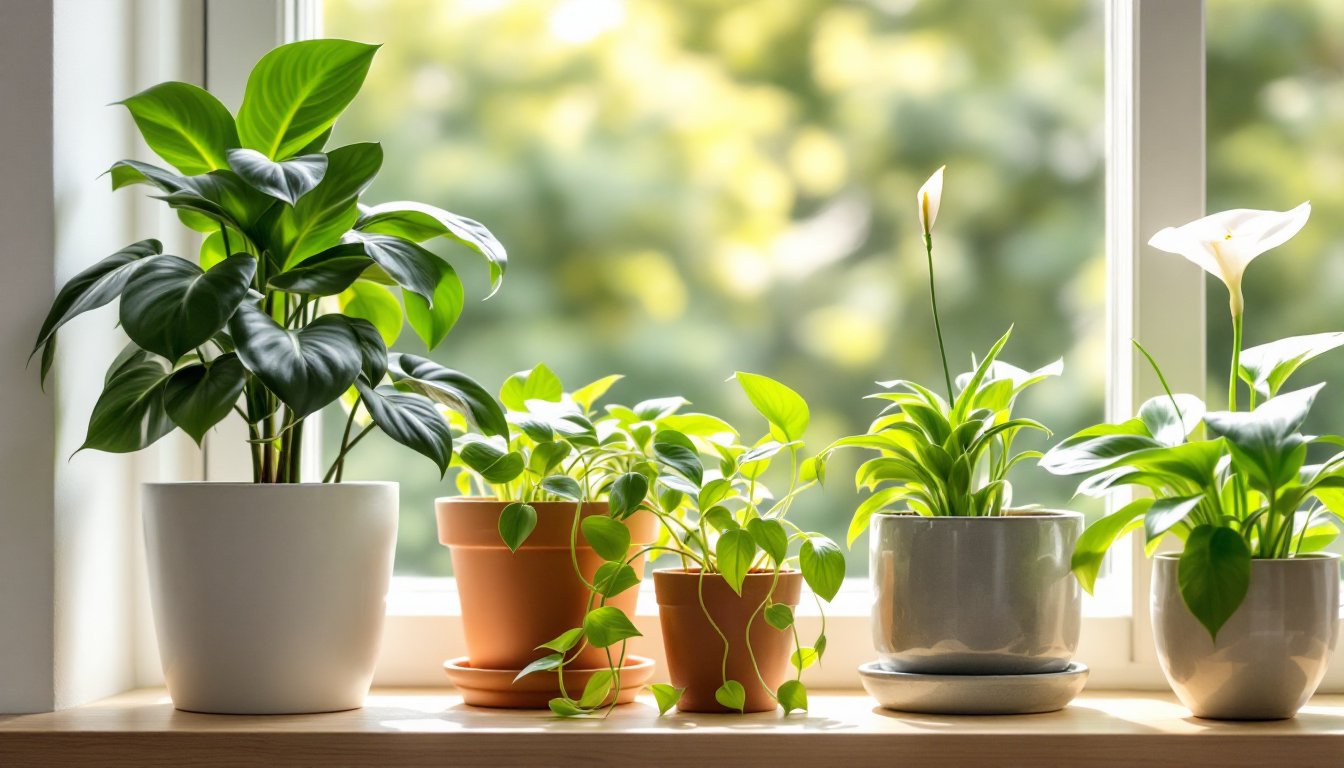
Peace lilies (Spathiphyllum) produce glossy green leaves and white spathes (modified leaves that look like flowers) several times a year. They’re one of the few low-maintenance plants that bloom reliably indoors without special treatment.
Peace lilies tolerate low light better than most flowering plants and signal when they need water by drooping dramatically. They recover quickly after watering, making them nearly foolproof. Many homeowners use peace lilies in bathrooms or offices where natural light is limited and consistent care is difficult. You’ll find similar recommendations from gardening experts who prioritize resilient plants for typical household conditions.
Watering: Water when the plant begins to droop slightly, usually once a week in typical conditions. Peace lilies prefer consistently moist soil but tolerate occasional drying. Overwatering causes root rot and yellowing leaves. If the soil smells sour or musty, you’re watering too often.
Light: Thrives in low to medium indirect light. Peace lilies bloom more frequently in brighter conditions but survive in dim corners. Avoid direct sun, which burns the leaves.
Temperature & Humidity: Room temperature (65–80°F) is ideal. Peace lilies appreciate higher humidity, mist occasionally or place on a pebble tray with water. Brown leaf tips indicate low humidity or chlorine in tap water.
Fertilizing: Feed with diluted liquid fertilizer every 6 to 8 weeks during spring and summer. Overfertilizing causes brown leaf tips and reduces blooming.
Toxicity Warning: Toxic to cats, dogs, and humans if ingested. Contains calcium oxalate crystals that cause oral irritation, drooling, and vomiting. Keep out of reach of pets and children.
Conclusion
These seven plants tolerate neglect, adapt to poor light, and survive typical household conditions without specialized care. Choose based on available light and how often you’ll remember to water. Snake plants and ZZ plants handle the most neglect. Pothos and spider plants grow fast and propagate easily. Peace lilies offer blooms without fussiness. Start with one or two, skip the complicated fertilizing schedules, and let the plants prove how resilient they are.