Table of Contents
ToggleL shaped kitchen cabinets wrap around two adjoining walls, creating one of the most versatile and space-efficient layouts available. This configuration works in everything from compact apartments to expansive homes, offering natural work zones without the footprint of a U-shaped or galley design. The L shape provides open floor plans while maintaining plenty of storage and counter space. Whether planning a full remodel or updating existing cabinetry, understanding how this layout functions, and where it excels, helps homeowners make smarter design and budgeting decisions.
Key Takeaways
- L shaped kitchen cabinets wrap around two adjoining walls to create a space-efficient, versatile layout that works in both compact and expansive homes while maintaining an open floor plan.
- The corner where two cabinet legs meet requires intentional solutions like Lazy Susans, blind corner pull-outs, or diagonal doors to maximize storage and eliminate dead space.
- Proper workflow efficiency depends on placing the sink, stove, and refrigerator within 13–26 feet of each other, with the longer cabinet leg typically housing the primary prep area and sink.
- Accurate measurements, including wall lengths at both counter and upper cabinet heights, ceiling height, and appliance dimensions, are essential before ordering L shaped kitchen cabinets to prevent costly installation mistakes.
- Smart storage solutions like pull-out drawers, appliance garages, toe-kick drawers, and glass-front wall cabinets can multiply usable space without requiring structural changes or expanding the kitchen footprint.
- Choosing between framed and frameless cabinet styles, along with material tiers from particleboard to solid hardwood, directly impacts both durability and budget across the 12–20 linear feet typical L shaped layouts require.
What Are L Shaped Kitchen Cabinets and Why Choose Them?
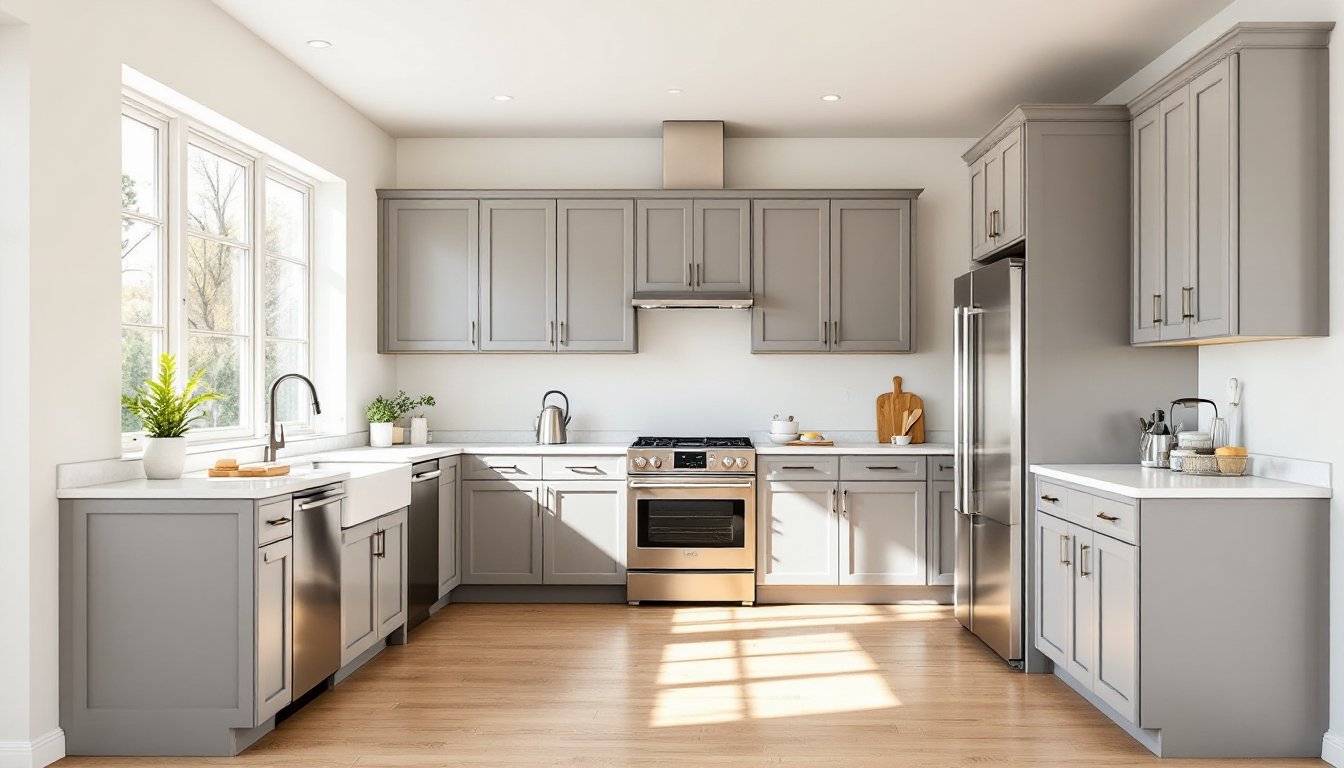
L shaped kitchen cabinets consist of two perpendicular runs of cabinetry forming a 90-degree angle, typically anchored in a corner. One leg is usually longer, while the shorter leg opens the kitchen to adjacent living or dining areas.
This layout suits open floor plans because it avoids blocking sightlines. The open side allows for an island, dining table, or clear walkway without cramping the cook zone. Small kitchens benefit from the efficient use of two walls, while larger spaces gain flexibility to add features like breakfast bars or peninsula extensions.
Unlike galley kitchens that can feel tunnel-like, the L configuration provides a natural work triangle connecting sink, stove, and refrigerator with minimal steps. Homeowners who want multiple cooks in the kitchen appreciate the elbow room, there’s no single choke point.
The corner where the two legs meet is both an asset and a challenge. Properly configured, it adds storage depth. Poorly planned, it becomes dead space with awkward reach. That corner is where cabinet selection and hardware make or break the layout.
Design Benefits of L Shaped Cabinet Layouts
L shaped kitchens deliver several functional advantages that justify their popularity in residential design. They work across budget ranges and style preferences while adapting to irregular floor plans.
First, the layout naturally separates task zones. One leg often houses the sink and dishwasher (near plumbing lines), while the other accommodates the range and prep counter. This segmentation reduces cross-traffic and minimizes the cook’s steps during meal prep.
Second, the open side promotes social interaction. Cooks can face into the room while working, making it easier to supervise kids or talk with guests. That openness also improves natural light penetration, especially when the open side faces windows or patio doors.
Third, L shaped cabinets adapt to varied room dimensions. A 10 × 10-foot kitchen handles the layout as comfortably as a 15 × 20-foot space. Designers can adjust leg lengths to fit narrow lots, angled walls, or rooms with multiple doorways.
Finally, the configuration supports hybrid uses. Adding a peninsula or island transforms the L into a modified U or G shape without major structural changes. Homeowners gain workspace and seating without the full cost of a custom build.
Optimizing Corner Space and Workflow Efficiency
The corner in an L shaped kitchen is the layout’s defining feature. Standard base cabinets meet at 90 degrees, creating a blind spot that’s hard to access. Solving this requires intentional hardware and cabinet selection.
Lazy Susans rotate shelves to bring items into reach. They fit round or kidney-shaped trays within the corner footprint. These work best for dry goods, mixing bowls, or small appliances. Expect to lose some usable volume due to the circular rotation, square containers don’t pack efficiently on round shelves.
Blind corner pull-outs use sliding shelves that extend forward, then swing out. These maximize cubic storage and accommodate bulky items like pots or small appliances. They require precise installation and sturdy slides rated for heavier loads.
Diagonal corner cabinets angle the door at 45 degrees, eliminating the blind spot entirely. The trade-off is reduced storage depth and a wider door swing that can interfere with adjacent drawers or appliances. They’re popular in designs emphasizing clean lines over maximum capacity.
Workflow efficiency also depends on the work triangle dimensions. The sum of distances between sink, stove, and refrigerator should fall between 13 and 26 feet, per common kitchen design guidelines. In an L layout, placing the sink in the corner shortens trips but can cramp the faucet clearance. Positioning it midway along one leg improves ergonomics and simplifies plumbing runs.
Planning Your L Shaped Kitchen Cabinet Configuration
Proper planning prevents costly mistakes like blocked doorways, misaligned appliances, or wasted corner space. Start with accurate measurements and a scaled floor plan before ordering cabinets.
Identify load-bearing walls if considering removal or relocation. Any structural changes require a permit and often an engineer’s stamp. Plumbing and electrical lines also constrain layout flexibility, moving a sink across the room adds significant cost.
Decide which leg will be longer. The longer run typically hosts the sink and primary prep area. The shorter leg accommodates the range or refrigerator and provides landing counter space. A common split is 12 feet on the long leg and 8 feet on the short leg, but room shape dictates final dimensions.
Account for appliance clearances. Dishwashers need 24 inches of width plus side clearance for the door swing. Ranges require at least 15 inches of counter on one side and 12 inches on the other (per IRC guidelines, though local codes vary). Refrigerators need door-swing clearance and shouldn’t block the work triangle.
Check door and window placements. Cabinet runs must end before interfering with trim, casings, or swing paths. Wall cabinets over windows reduce natural light, consider open shelving or terminating uppers short of the window.
Measuring and Layout Considerations
Measure twice, order once. Use a laser measure for accuracy, checking wall lengths at both counter height (36 inches) and upper cabinet height (54 inches). Walls aren’t always straight or plumb.
Record the following dimensions:
- Wall lengths from corner to corner along each leg
- Ceiling height to determine upper cabinet size (standard is 30, 36, or 42 inches tall)
- Window and door locations with exact trim widths
- Plumbing and electrical outlets, noting both height and distance from corners
- Appliance dimensions, including actual width (not just cutout size)
Base cabinets come in widths from 9 to 48 inches (in 3-inch increments). Wall cabinets follow the same sizing. Fillers, narrow strips of matching material, fill gaps between cabinets and walls. Plan for at least a 1-inch filler on each end to allow scribing and leveling.
Floor levelness matters more than most DIYers expect. Check with a 4-foot level along both legs. Out-of-level floors require shimming base cabinets during installation, affecting countertop fit and appliance alignment.
Draw a scaled layout on graph paper (or use free tools like SketchUp). Mark stud locations (typically 16 inches on center) since wall cabinets must anchor into studs, not just drywall. Factory-built cabinets ship with hanging rails: frameless European-style cabinets may use adjustable clips.
Many homeowners exploring L-shaped kitchens find that visualizing multiple configurations helps clarify priorities before committing to orders.
Cabinet Style and Material Options for L Shaped Kitchens
Cabinet construction and finish impact both durability and budget. L shaped kitchens typically require 12 to 20 linear feet of cabinetry, so material choice scales quickly in cost.
Framed cabinets feature a face frame attached to the cabinet box, with doors and drawers mounted to the frame. This traditional construction is sturdy and forgiving of out-of-square walls. The frame reduces the opening size slightly, which can matter in tight spaces.
Frameless (European-style) cabinets eliminate the face frame, mounting doors directly to the box. This maximizes interior space and supports full-overlay doors for a seamless look. They require more precise installation since there’s no frame to hide gaps.
Materials break into several tiers:
- Particleboard or MDF cores with laminate or thermofoil faces offer the lowest cost. They resist moisture poorly and can’t be refinished, but they’re fine for budget builds or rental properties.
- Plywood boxes with hardwood face frames and doors provide mid-range durability. They handle moisture better and support heavier countertops.
- Solid hardwood (maple, oak, cherry) cabinets deliver longevity and can be refinished multiple times. Expect to pay 40–60% more than plywood alternatives.
Door styles set the visual tone. Shaker doors (flat center panel with square frame) suit both modern and traditional kitchens. Slab doors (flat with no frame) lean contemporary. Raised-panel doors add detail for classic or transitional designs.
Finish options include paint, stain, or two-tone combinations. Painted cabinets (especially whites and grays) remain popular in 2026, though they show wear on high-traffic doors. Stained wood highlights grain but limits color flexibility. Two-tone designs, such as dark lowers and light uppers, add visual interest and can make small kitchens feel larger.
Order samples before committing. Finish appearance varies with lighting, and small swatches don’t always represent full-door color accurately.
Storage Solutions and Corner Cabinet Ideas
L shaped kitchens offer ample storage if configured thoughtfully. Beyond the corner itself, smart cabinet interiors and accessories multiply usable space.
Base cabinet options:
- Pull-out drawers instead of shelves improve access to back items. Soft-close slides rated for 75–100 pounds prevent slamming and extend hardware life.
- Waste and recycling pull-outs hide bins while keeping them accessible. Tip-out trays above the sink store sponges and scrub brushes.
- Spice pull-outs (narrow cabinets, 6 to 9 inches wide) fit between appliances or at the end of a run. They use otherwise wasted filler space.
- Appliance garages with tambour (roll-up) doors conceal toasters and mixers on the counter while keeping them plugged in.
Wall cabinet upgrades:
- Lift-up doors with gas struts open upward, avoiding head bumps and improving sightlines.
- Glass-front doors on a few uppers create visual breaks and showcase dishware without full open-shelving commitment.
- Under-cabinet lighting (LED strips or puck lights) improves task lighting and adds ambiance. Wire them to a switched circuit or use plug-in options for DIY installs.
Specialized corner solutions:
Beyond lazy Susans and blind pull-outs, consider a corner sink if plumbing allows. This positions the work zone centrally and eliminates the blind corner entirely. It requires a custom countertop cutout and often a smaller sink, but it opens up adjacent cabinets for full-depth storage.
Alternatively, leave the corner open for a built-in wine rack or vertical tray divider. These don’t require mechanical hardware and can be DIY-friendly additions.
For small spaces, integrating ideas from resources covering small kitchen solutions can reveal creative ways to stretch storage capacity without expanding the footprint.
Upper corner cabinets often go diagonal or stop short of the corner. If extending both uppers into the corner, a corner wall cabinet with a single angled door avoids the awkward double-door configuration that blocks itself when opened.
Don’t overlook toe-kick drawers. These shallow drawers hide in the 4-inch recess under base cabinets, perfect for baking sheets, cutting boards, or pet supplies. They require precise installation but add 10–15% more storage at minimal cost.
Finally, plan vertical storage wherever possible. Pull-down shelving in tall pantry cabinets (if added to one leg of the L) brings upper items to eye level with a gentle tug. These systems cost more but pay dividends for users with mobility concerns or shorter reach.
Many design examples showcasing small-space cabinet optimization highlight how thoughtful interiors make compact L layouts feel surprisingly spacious.